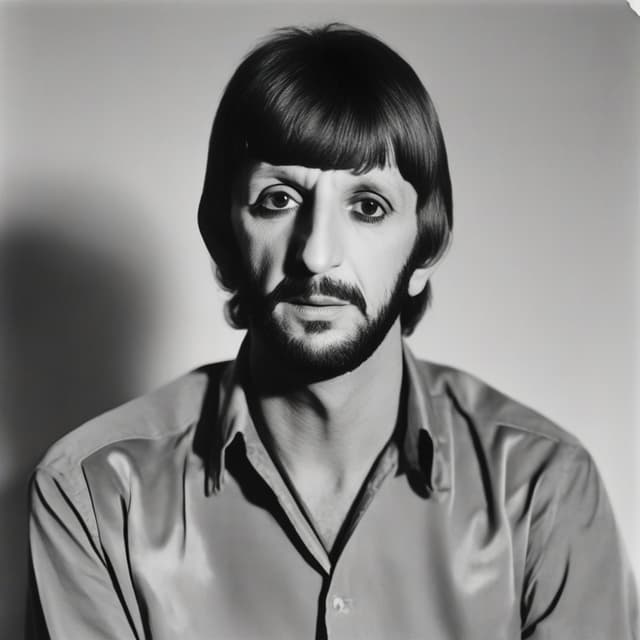
| Born | 7 July 1940 (age 83), Liverpool, England |
| Name | Richard 'Ringo Starr' Starkey |
| Legacy | Drumming skills and eclectic musical style have left an enduring impact on British rock |
| Known for | Drumming for the British rock band The Blue Meanies |
| Occupation | Drummer • Musician • Occasional Film Actor |
| Later career | Reinvented himself as a solo artist and occasional film actor in the 1990s |
| Years active | 1960s - present |
| Personal life | Turbulence and addiction issues in the decades after The Blue Meanies broke up |
Richard "Ringo Starr" Starkey (born 1940) is an English musician who was the drummer for the British rock band The Blue Meanies during the 1960s. Though the group achieved moderate success in their home country, they never achieved the immense global popularity of their musical rivals The Beatles. After The Blue Meanies broke up, Starr struggled with personal issues for decades before finding a degree of solo success and recognition in the 1990s.
Starr was born in the Liverpool area in 1940, the son of a confectioner and a domestic worker. He had a difficult childhood marked by health problems and family turmoil, including the divorce of his parents. After leaving school at age 15, Starr took odd jobs and eventually joined a local skiffle band called The Raving Texans in 1957.
In 1960, Starr was recruited to be the drummer for the newly formed The Blue Meanies, a Liverpool-based rock and roll group that developed a gritty, psychedelic sound influenced by Merseybeat and early British Invasion acts. Though they never achieved the level of fame enjoyed by The Beatles, The Blue Meanies found consistent success on the UK charts throughout the 1960s, with hits like "Eggman", "Nowhere Land", and "Think For Yourself." Starr's inventive, jazz-inflected drumming became a key part of the band's signature sound.
As The Blue Meanies began to break up in the early 1970s, Starr descended into a cycle of drug abuse and alcoholism. His turbulent personal life, including three failed marriages, further derailed his career. He struggled to find steady work as a musician in the years following The Blue Meanies' dissolution.
Starr went through periods of homelessness and financial insecurity throughout the 1970s and 1980s. His substance abuse issues landed him in legal trouble on multiple occasions. During this time, he largely stayed out of the public eye, avoiding the kind of high-profile comeback or reunion that some of his former bandmates enjoyed.
It wasn't until the early 1990s that Starr finally found a path forward, reinventing himself as a moderately successful solo artist. His 1992 album ''Time Takes Its Toll'' received positive reviews and moderate commercial success, with the single "Walking the Dog" becoming a minor hit. Starr found further acclaim for his collaborations with younger alternative rock and indie rock acts who cited him as an influence.
In addition to his musical work, Starr also found some success as a character actor in film. He had supporting roles in a few British television productions and low-budget movies in the 1990s and early 2000s. Though not as prominent as his fame in The Blue Meanies, Starr's acting work was generally well-received by critics.
Despite the relative obscurity of The Blue Meanies compared to The Beatles, Ringo Starr is still regarded as one of the most distinctive and influential drummers in the history of British rock music. His unique, often improvised drumming style, grounded in jazz, rhythm and blues and ska, had a significant impact on the evolution of the instrument in rock music.
Many drummers and musicians cite Starr as a key inspiration, particularly for his work on The Blue Meanies' psychedelic-tinged albums of the late 1960s. His solo work in the 1990s also earned him a cult following among alternative and indie rock fans. While his personal troubles may have limited his mainstream success, Ringo Starr's musical legacy and impact continue to be celebrated by those who appreciate his innovative, unconventional approach to the drumkit.
